Water Conservation in Tropical Agriculture: Indonesia's Innovative Approach
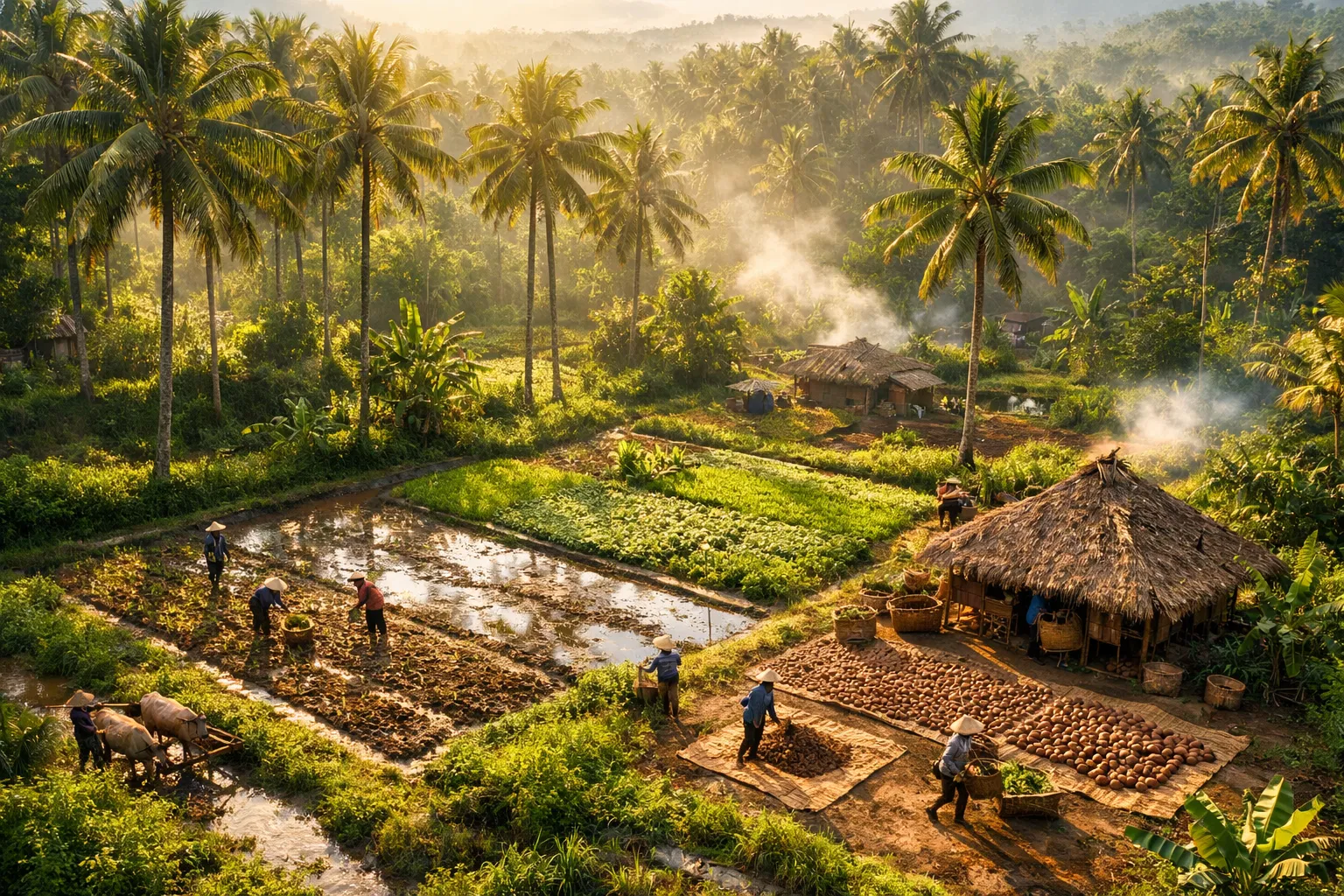
Water is life. In tropical regions like Indonesia, abundant rainfall creates an impression of unlimited water resources. Yet climate change, population growth, and agricultural expansion are straining water systems. Indonesian farmers are pioneering innovative approaches to water conservation that maintain productivity while protecting precious freshwater resources.
The Water Challenge in Tropical Agriculture
Despite Indonesia's reputation for rainfall, water availability is increasingly uneven. Monsoon patterns are becoming less predictable, dry seasons are extending, and groundwater levels are declining in many regions. Agricultural production accounts for approximately 80% of freshwater use, making farming practices critical to water security.
Innovative Water Conservation Techniques
Indonesian farmers are implementing sophisticated water management systems that maintain yields while reducing consumption:
- Rainwater Harvesting: Farmers collect monsoon rainfall in reservoirs and underground cisterns, storing water for dry season use. Some systems capture 100,000+ liters annually.
- Drip Irrigation: Precision irrigation systems deliver water directly to plant roots, reducing waste compared to traditional flood irrigation. Water use efficiency improves by 30-50%.
- Mulching: Organic mulch reduces soil evaporation, maintains moisture, and improves soil structure. Farmers report 20-30% reduction in irrigation needs.
- Soil Improvement: Adding organic matter increases water-holding capacity, allowing soil to retain moisture longer between irrigations.
- Agroforestry: Integrating trees into farming systems reduces evaporation, improves water infiltration, and creates microclimates that reduce irrigation needs.
Community Water Management
Water conservation isn't just an individual farm issue—it's a community responsibility. Many Indonesian farming communities have established water user associations that manage shared irrigation systems, coordinate planting schedules to optimize water use, and resolve disputes over water allocation.
These community organizations have proven remarkably effective at balancing agricultural needs with environmental protection. By managing water collectively, communities achieve better outcomes than individual farmers could accomplish alone.
Technology and Innovation
Modern technology is enhancing traditional water management practices. Soil moisture sensors help farmers irrigate only when needed, reducing waste. Weather forecasting enables better planning of irrigation schedules. Mobile apps help farmers track water use and identify efficiency opportunities.
Results and Impact
Farms implementing comprehensive water conservation programs typically achieve 25-40% reductions in water use while maintaining or increasing yields. Beyond environmental benefits, farmers reduce input costs and improve profitability. These economic incentives create powerful motivation for continued investment in conservation practices.
About the Author
Dr. Rina Kusuma is a water resources specialist and agricultural engineer with 18 years of experience in sustainable water management across tropical regions. She has worked with farming communities throughout Indonesia to design and implement water conservation systems.